


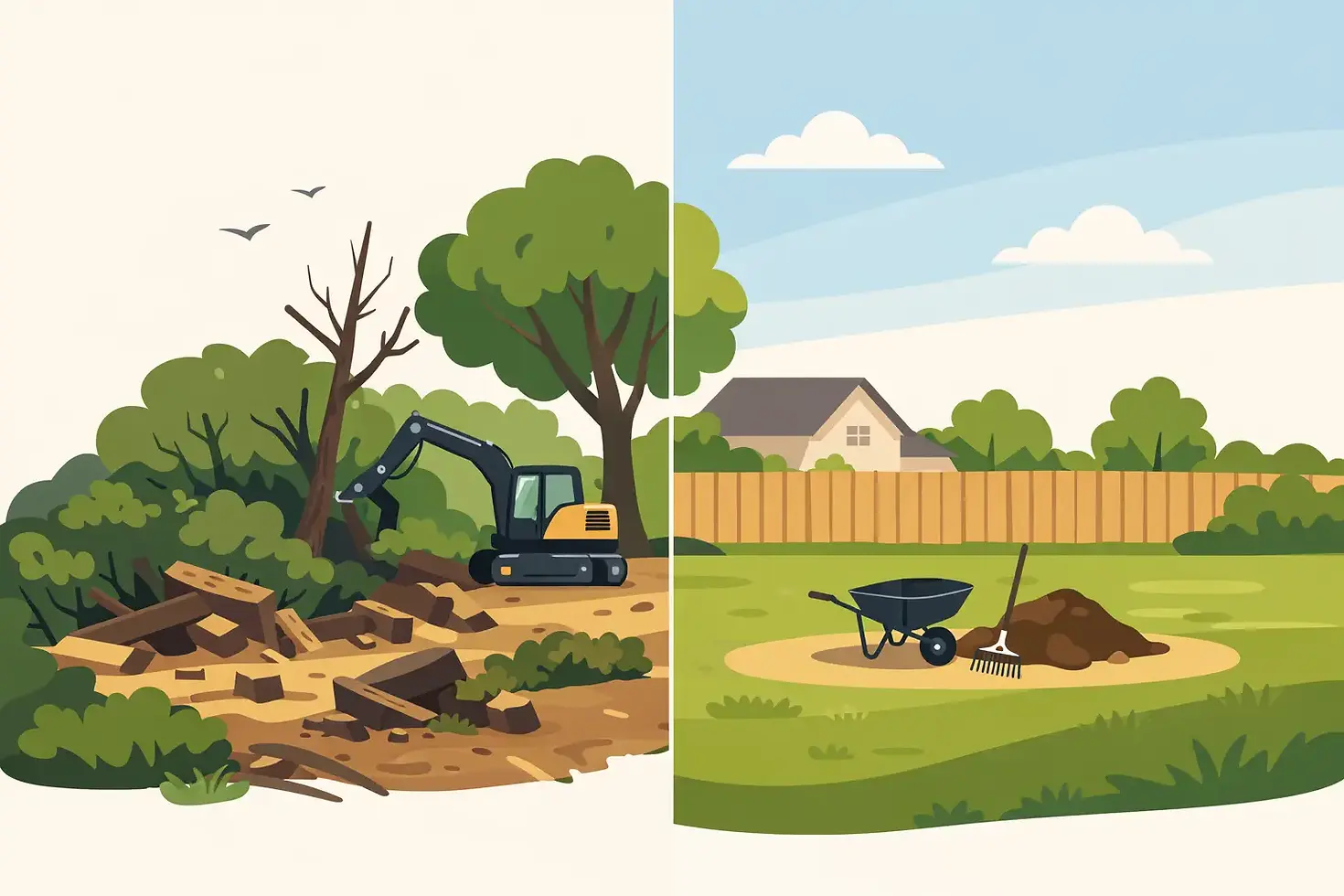
Residential Land Clearing for a Usable Yard
- Joseph Francis
- Aug 12
- 5 min read

A stump in the middle of a future garden bed, a row of overgrown shrubs along a fence, or storm debris piled near the driveway can keep a yard from being used the way you want. Residential land clearing is not always about stripping a property bare. For most homeowners, it means removing the specific obstacles that are taking up space, creating hazards, or holding back the next project.
The best result is a cleaner, more useful yard without unnecessary damage to the turf, trees, and landscaping you want to keep. That takes a clear plan, the right equipment, and a contractor who looks beyond what is visible above ground.
What Residential Land Clearing Can Include
Residential clearing work varies from one property to another. A recently purchased home may have old stumps left from prior tree removal. An established yard may need brush cleared to make room for a fence, patio, play area, shed, or expanded lawn. After a storm, the immediate need may be broken limbs, downed small trees, and debris that needs to be moved out safely.
Common residential projects include small tree removal, shrub and brush removal, stump grinding, root-area cleanup, and hauling away debris. These services often work together. Removing a small tree but leaving its stump can still limit where you can mow, plant, install a fence, or level the ground. Grinding the stump below grade helps restore that space for practical use.
The scope matters. Clearing a few problem areas around a home is different from preparing a large undeveloped lot for construction. A qualified contractor should explain what equipment is appropriate for the job, what can be removed safely, and whether access, slopes, utility lines, or drainage conditions affect the plan.
Start With the Purpose of the Space
Before clearing begins, decide what the area needs to become. The same patch of brush may require a different finish depending on whether it will become lawn, a vegetable garden, a gravel parking area, or a fence line.
For a lawn or planting bed, homeowners usually want stumps ground low enough that the area can be covered with soil and finished properly. For a fence installation, the priority may be clearing the line, removing roots or stumps that interfere with posts, and leaving enough working room for the installer. If the purpose is simply better access or curb appeal, selective removal may be the smarter and more affordable choice.
It is worth identifying the trees, shrubs, and natural features you want to keep. Mature shade trees, healthy ornamental plants, drainage swales, and established turf can be valuable parts of a property. Good clearing is selective when it needs to be. Taking out everything quickly can create erosion, muddy areas, or a yard that feels more exposed than expected.
Why Stumps Are Usually the Hard Part
A cut stump may look harmless, but it can be the most stubborn part of a clearing project. It creates a tripping hazard, catches mower blades, attracts insects as it decays, and makes it difficult to use the space evenly. Roots can also extend well beyond the visible stump, especially on mature trees.
Stump grinding is often the practical solution because it breaks down the stump below ground level without requiring a large hole from full excavation. The final grinding depth depends on the planned use of the area. A spot that will be covered with mulch may need less finishing work than a location intended for grass, a garden, or a hardscape project.
Grinding produces wood shavings, and homeowners should decide ahead of time whether they want those shavings left on site or removed. They can be useful as temporary mulch in some areas, but they are not always the right material for a finished lawn or planting bed. If the goal is a clean, level surface, removal and backfilling may be the better option.
Access and Site Conditions Affect the Job
Two stumps of the same size can require very different work. One may sit near the curb with easy equipment access. The other may be behind a gate, beside a pool, between landscape beds, or near a retaining wall. Access determines what equipment can be brought in and how carefully the crew must work around the property.
In the Upstate, damp ground, clay soil, slopes, and tight backyard access are common considerations. Heavy equipment on soft turf can leave ruts, while a narrow gate may require smaller equipment and more time. This does not mean a job cannot be completed. It means the plan and price should reflect the real site conditions rather than a quick guess based only on the number of stumps.
Underground utilities also need attention before digging, grinding near buried lines, or removing roots in sensitive areas. Homeowners should point out irrigation heads, septic components, landscape lighting, invisible pet fences, and any known utility locations. A careful walk-through before work starts helps prevent surprises.
How to Get an Accurate Clearing Quote
Clear information saves time and helps avoid misunderstandings. Photos are one of the fastest ways to begin. Take a wide photo showing the entire area, then closer photos of each stump, brush section, or small tree that needs attention. Include a picture showing the route from the street or driveway to the work area when access may be tight.
For stumps, measure the widest point across the stump at ground level. Also mention how high it stands, whether it is near a structure or fence, and whether the site is accessible through a standard gate. If you want shavings hauled away, say so when requesting the quote.
For brush and small tree removal, a photo should show height, density, and what is nearby. A contractor needs to know if material is tangled in fencing, growing close to a building, or sitting near utilities. The more complete the information, the more likely the quote will match the work required on arrival.
What Good Cleanup Looks Like
The clearing itself is only part of the service. A job can look unfinished if the work area is left with scattered branches, loose shavings, tire marks, or debris near the curb. Homeowners should ask what cleanup is included and how the area will look once the equipment leaves.
A professional residential clearing job should keep equipment movement as controlled as site conditions allow, protect nearby features where practical, and remove agreed-upon debris. Some minor surface disturbance can be unavoidable, particularly on wet ground or around large root systems. The important point is honest communication before work begins and a reasonable effort to leave the property orderly.
If the area will be seeded, sodded, landscaped, or built on afterward, ask whether additional grading, soil, or root removal will be needed. Stump grinding creates a workable starting point, but a finished landscape may still need topsoil and final leveling. Knowing that ahead of time helps you schedule the next step without delay.
When Selective Clearing Makes More Sense
More removal is not automatically better. Homeowners often get the strongest result by clearing only the overgrowth that affects safety, access, maintenance, or a planned improvement. Keeping healthy trees can preserve shade and privacy, while removing a few poorly placed shrubs can open up a yard dramatically.
Selective clearing also makes it easier to manage the budget. Start with hazards, stumps in active lawn areas, brush along a proposed project line, or debris that prevents access. If the work needs to happen in phases, a local contractor can help identify which areas should be handled first.
For homeowners in Taylors and across the Upstate, Elite Stump Grinding can assess the visible obstacles as well as the access and cleanup details that affect the finished result. A few clear photos, measurements, and a description of what you want to do with the space can turn a cluttered corner of the yard into a practical plan.


Comments