


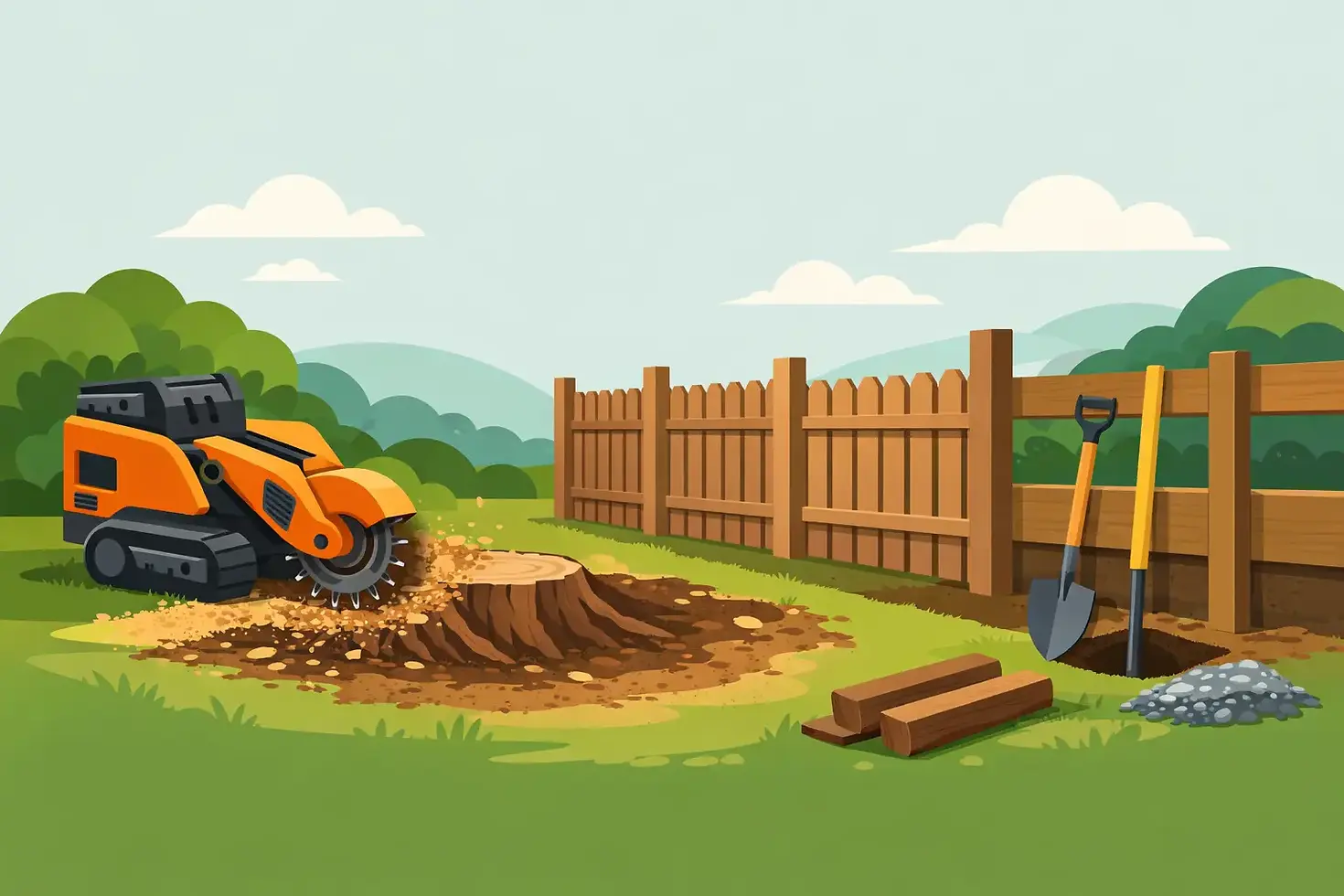
Stump Grinding for Fence Installation Made Simple

A stump sitting on a planned fence line can turn a straightforward project into a frustrating one. Stump grinding for fence installation clears the obstruction, but the work needs to be planned around post locations, root spread, equipment access, and the final grade of the yard. Taking care of the stump before fencing begins gives the fence crew a cleaner, more stable area to work with.
Why a stump causes trouble on a fence line
A fence needs posts placed at consistent locations and set deep enough to hold against wind, gate use, and shifting soil. A stump or major surface roots can block the exact spot where a post needs to go. Trying to move every post around the obstruction can leave the fence with uneven panel spacing, awkward corners, or a gate that does not fit where it should.
Roots can create problems even when the stump is a few feet away from the proposed fence. Older trees often have roots extending well beyond the visible stump, especially in an established Upstate yard. A post-hole auger may catch a root, deflect off it, or leave the installer digging by hand. That adds time and can make it harder to get a properly sized, properly placed hole.
Grinding first is usually the cleaner choice. It removes the visible stump and breaks down the central root mass so the fence layout can follow the plan instead of working around a leftover tree base.
Plan stump grinding for fence installation before posts are set
The best time to grind a stump is before the fence contractor lays out post holes, brings in materials, or sets terminal posts. Once a fence is installed, access becomes tighter. A grinder may no longer fit through the gate, and the crew may have to work carefully around new panels, posts, and landscaping.
If you already have a survey, property pins, or a proposed fence layout, share that information when requesting a stump quote. The grinder operator does not need to design the fence, but knowing which side of the stump the fence will run along helps determine how much of the surrounding root area may need attention.
It also helps to mark the stump and explain whether the fence will be wood, vinyl, aluminum, chain link, or another material. A privacy fence with heavier posts has different needs than a lightweight garden border. Gates deserve special attention because gate posts carry extra stress and should not be placed in loose, poorly prepared ground.
Grinding depth should match the project
For many yard projects, grinding a stump below the surrounding soil level is enough to remove the tripping hazard and make the area easier to mow. For a fence installation, the goal is more specific: create enough clearance for the planned post locations without unnecessarily disturbing the entire yard.
The needed depth depends on where the posts will go, the size of the stump, and how close the fence runs to it. Fence posts are often installed much deeper than the grinding depth, so grinding does not mean every root in the area disappears. Large roots can continue beyond the ground-up section of the stump.
That is why a fence installer and stump grinder should not assume the other contractor has handled every underground issue. A good plan identifies the intended post locations first. If a post is directly over the former stump center or beside a major root flare, it may be better to shift the layout slightly, remove additional material, or choose another practical solution before concrete is poured.
Understand what grinding removes and what remains
Stump grinding turns the stump into wood chips and removes the above-ground obstacle. It does not pull out an entire root system like excavation. For most fence projects, that is a benefit. Full stump and root removal can disturb a much larger section of lawn, damage nearby plants, and leave a bigger hole to repair.
The trade-off is that roots outside the grinding area may remain in place. Smaller roots will gradually break down. Larger roots can take longer, and they may still be encountered during post-hole digging. This is especially common with mature hardwood stumps and trees that grew close to the property line.
A practical approach is to grind the stump thoroughly, remove or spread the resulting shavings as appropriate, and let the fence crew test-dig any post locations that are close to the former tree. That gives everyone a realistic picture before the installation reaches the point of no return.
Keep the fence line level after grinding
A ground stump leaves behind a depression filled with a mix of soil and wood shavings. That material is not the same as compacted native soil. If it is used as the base for a fence post, it can settle as the wood breaks down, potentially affecting the post over time.
For that reason, fence posts should not be set directly into loose grindings. The post hole should be dug into suitable soil, with the installer following the fence manufacturer’s recommendations and local conditions for depth and concrete use. If the original stump was directly where a post must go, the contractor may need to remove shavings, bring in clean fill, compact the area, or adjust the post location.
Proper final grading matters, too. Water should not collect along the fence line or around posts. In the Upstate, heavy rain can expose low spots quickly. After the stump is ground, the area may need topsoil and seed, sod repair, or a small amount of grading so water drains away from the fence rather than pooling beside it.
Access and site protection matter
Fence work often happens along the edges of a property, where access can be limited by gates, driveways, garden beds, air-conditioning units, and neighboring fences. Before scheduling, consider how stump-grinding equipment will reach the work area. A clear path can make the job more efficient and reduce the chance of disturbing established landscaping.
Photos are one of the fastest ways to assess access. Include a clear photo of the stump, a wider photo showing the route into the yard, and a picture that shows its distance from structures or fences. A measurement of the stump at ground level, along with its approximate height, helps produce a more accurate quote.
Tell the contractor if you want the stump shavings removed. Some homeowners use them in natural areas or as temporary mulch away from the fence line. Others prefer a clean work area so the fence installer can begin right away. Either choice can work, but it should be discussed before the job starts.
Do not overlook utilities and irrigation
A fence line can cross more than roots. Underground utility lines, irrigation pipes, landscape lighting wires, and invisible pet-fence lines may be present even when there is no visible sign above ground. Utility locations should be requested before digging begins, and homeowners should point out any private systems that may not be included in a standard utility marking service.
Stump grinding is typically focused on the stump and immediate root area, while fence installation requires deeper holes at specific intervals. Coordinating both jobs helps avoid surprises. If an irrigation line runs near the stump or a utility mark falls within the planned fence route, the layout may need adjustment before equipment arrives.
When to schedule the work
If your fence is being installed soon, schedule stump grinding early enough to allow for cleanup and any needed grading. Grinding one day and setting posts the next can be possible when access is clear and the site is simple. A larger stump, a wet yard, or a post location directly through the old stump area may call for more time.
Avoid waiting until the fence crew is already on site to address a stump. Last-minute changes can create scheduling delays and may leave you paying for a return visit. A short conversation between the homeowner, stump contractor, and fence installer before work begins is often all it takes to prevent that problem.
Elite Stump Grinding can assess the stump, surrounding roots, access route, and cleanup needs so homeowners can prepare the fence line with fewer surprises. Clear photos and measurements make it easier to provide a quote that reflects the actual work.
A straight fence starts with a clear path, firm ground, and room to place every post where it belongs. Handle the stump before construction begins, keep the fence installer informed about what was ground, and give the site a careful look after cleanup. That preparation helps the finished fence look intentional from the first post to the last.


Comments